
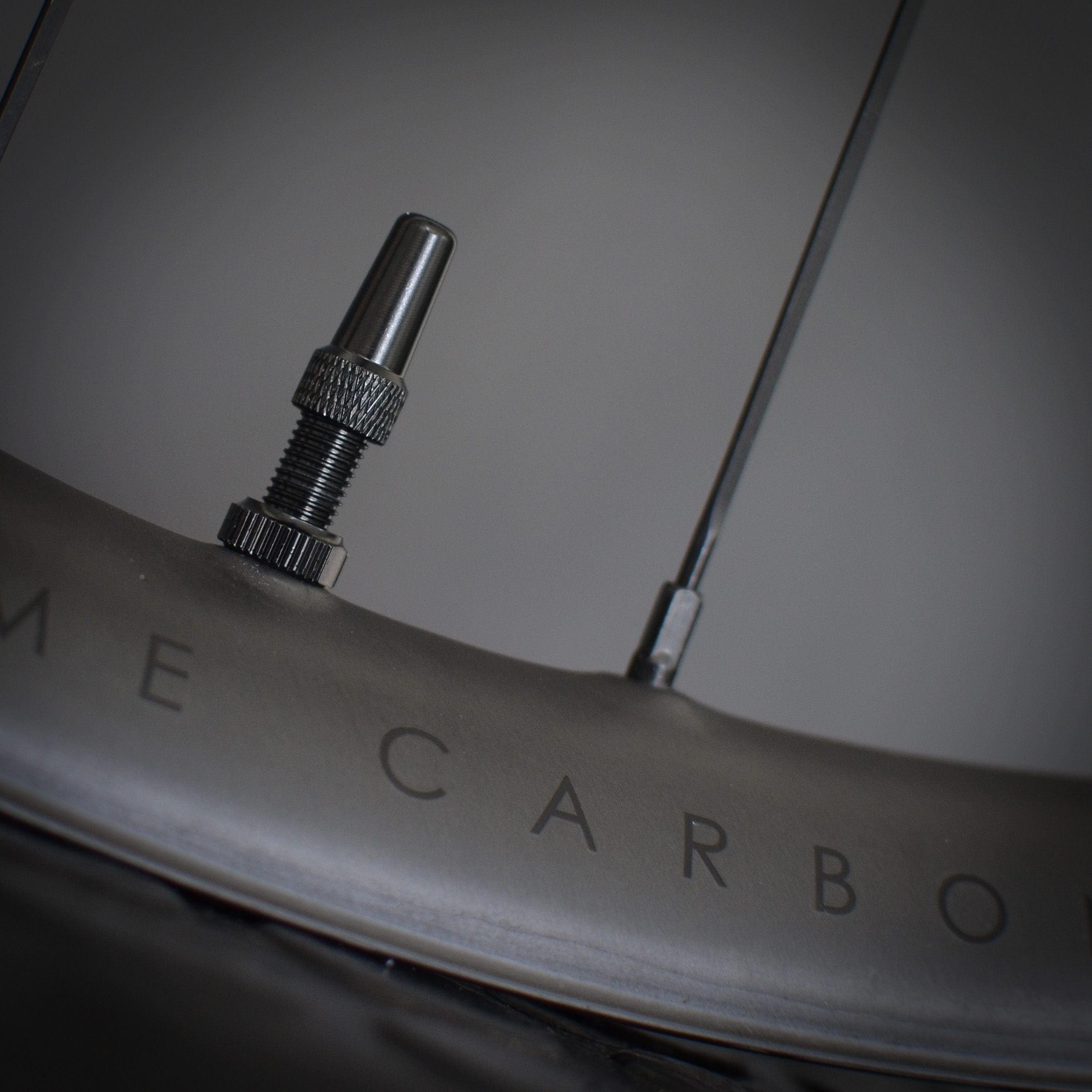
Not every bike deserves a premium wheel upgrade. And that’s okay.
At Wheelbuilder I could sell wheels to anyone who contacts me. But I’d rather be honest with you about when an upgrade makes sense… and when it’s better to spend your money elsewhere.
Let’s start with the hard truths.
When you should NOT upgrade your wheels
1. Your frame is compromised
If your frame has cracks, significant dents in critical areas, or structural damage, stop. Don’t pass go. Don’t spend R20,000 on wheels.
A compromised frame is a safety issue. No wheel upgrade will fix that. Your money needs to go toward a new frame or a complete bike replacement first.
Red flags to look for:
- Cracks in welds, especially around the head tube, bottom bracket, or rear triangle
- Significant dents or dings in aluminum frames
- Carbon frames with visible damage, soft spots, or delamination
- Frames that have been in serious crashes
2. The bike doesn’t fit you properly
If you’re constantly uncomfortable, experiencing pain, or struggling with the bike’s geometry, new wheels won’t solve that problem.
A bike that’s too small, too large, has the wrong reach, or puts you in an awkward riding position needs to be replaced—not upgraded.
Wheels can transform performance. They can’t change geometry.
3. You’re unhappy with the bike’s intended use
Bought a cross-country hardtail but realized you want to ride enduro? Have a 26″ wheel bike but all your friends ride modern geometry 29ers?
Sometimes the bike itself is the mismatch. Premium wheels on a bike you don’t actually want to ride is money wasted.
Ask yourself: If this bike had perfect wheels, would I still be eyeing other bikes? If yes, you need a different bike.
4. Multiple major components need replacing
If your fork is blown, your drivetrain is shot, your brakes are done, AND your wheels are worn out—you’re looking at a complete rebuild, not an upgrade.
At that point, the math changes. You might be spending R10,000-R15,000 on components plus R15,000-R25,000 on wheels. That’s R25,000-R40,000 into an old frame.
For that money, you could be looking at a complete new bike with warranty coverage on everything.
Rule of thumb: If you’re replacing 3+ major systems simultaneously, run the numbers carefully against a new bike purchase.
5. You ride casually or infrequently
Be honest with yourself about how much you actually ride.
If your bike comes out once a month for a leisure cruise, or sits in the garage for months at a time, a premium wheel upgrade isn’t going to change that behavior.
High-end wheels are built for people who ride hard and ride often. If that’s not you, there’s no shame in it—but your money is better spent elsewhere.
6. You’re on a tight budget and need reliability above all
Premium wheels are an investment. If that investment means you can’t afford to replace worn brake pads, tires, or chains when needed, you’ve got your priorities wrong.
Maintenance and reliability always come before upgrades. Always.
A bike that’s properly maintained with mid-tier wheels will outperform a neglected bike with carbon hoops every single time.
When you SHOULD upgrade your wheels
Now let’s talk about when a wheel upgrade makes perfect sense.
1. Your wheels are genuinely worn out
After years of hard riding, wheels wear. If you’re experiencing:
- Broken or frequently breaking spokes
- Rims that won’t stay true
- Bearings with play, grinding, or resistance that doesn’t go away when they’re replaced
- Cracked or damaged rims
- Corroded or seized spoke nipples
- Freehub bodies that slip or stick
…your wheels are done. At this point, you’re not choosing between keeping your wheels or upgrading—you’re choosing between a quality upgrade or a cheap replacement.
That’s when the math gets interesting.
2. You genuinely love your bike and ride it regularly
This is the golden criteria. If you:
- Ride at least once per week
- Have logged serious mileage on this bike
- Know exactly how it handles
- Have it dialed in to fit you perfectly
- Genuinely enjoy every ride
…then you’ve proven the relationship works. A wheel upgrade isn’t a gamble—it’s investing in something that already delivers value.
3. Everything else on the bike is in good working order
Your frame is solid. Your fork is serviced and working well. Your drivetrain shifts cleanly. Your brakes are reliable.
When wheels are the only weak link in an otherwise solid bike, that’s the perfect time to upgrade. You’re fixing the actual bottleneck, not papering over bigger problems.
4. You’re planning to keep riding for years
Wheel upgrades make sense when you have a long time horizon.
If you’re thinking “I’ll ride this bike for another 2-3 years minimum,” then quality wheels become a multi-year investment, not a short-term expense.
If your current bike uses modern wheel axle standards, like BOOST hubs on a MTB, or 12mm thru axles on a gravel or road bike, you can move your premium wheels over to a new bike when you get one.
The wheels will almost certainly be better than the ones that come stock on a new bike…
Factor in the longevity: premium wheels properly maintained can last 10-20 years. That R20,000 wheelset becomes R1,000-R2,000 per year of use.
5. Your riding has evolved beyond your wheels’ capability
Maybe you started on mellow trails but now you’re riding more aggressive terrain. Maybe you’ve gotten fitter and faster. Maybe you’re putting more power through the pedals than you used to.
If your current wheels feel flexy, unresponsive, or like they’re holding you back on technical descents or hard climbs—and everything else about the bike feels great—wheels are your answer.
6. You want tubeless but your current rims aren’t compatible
This isn’t new, but tubeless is transformative for mountain biking. Lower pressures, better traction, fewer flats, improved ride quality.
If your current wheels are rim-brake-only or have non-tubeless-compatible rims, and you’re committed to tubeless riding, a wheel upgrade is the cleanest solution.
You get tubeless capability plus all the other benefits of modern wheel technology.
7. You’re experiencing frequent mechanical issues
Constantly truing wheels, replacing spokes, or dealing with hub problems isn’t just annoying—it’s expensive and time-consuming.
If you’re spending R500-R1,000 per year on wheel maintenance and truing, that’s R5,000-R10,000 over a decade. At that point, investing in bombproof wheels that just work starts to make financial sense.
8. The performance upgrade is meaningful for your riding style
Different riding styles benefit differently from wheel upgrades:
XC and marathon riders: Lighter wheels mean easier climbing and acceleration.
Trail and all-mountain riders: Stiffer wheels mean better handling and control.
Enduro and downhill riders: Stronger wheels mean fewer mechanicals on rough terrain.
Bikepacking and touring: Durable wheels with high spoke counts mean reliability on remote trails
If the upgrade aligns with how you actually ride, the value is real.
The middle ground: When it’s worth considering
Some situations aren’t clear-cut. Here’s when you should think carefully:
Your bike is 3-8 years old with moderate wear
Not brand new, but not completely worn out either. This is judgment call territory.
Questions to ask:
- How much life is left in the frame and major components?
- Are you still enjoying the bike, or is the relationship cooling off?
- Would wheels genuinely solve your main complaints about the bike?
- Does your bike use modern standards, like BOOST hubs?
You’re considering a mid-tier upgrade, not premium
Maybe you’re not looking at R25,000 carbon wheels—just a solid R10,000-R15,000 alloy upgrade.
The math changes here. Lower investment means lower risk. If the bike has 2-3 good years left in it, a mid-tier wheel upgrade can be excellent value.
You have multiple bikes
If you’re rotating between bikes and this isn’t your primary ride, think carefully.
Will upgraded wheels make you ride this bike more? Or will it still be your backup while your main bike gets all the miles?
The bottom line: Ask yourself three questions
Before you commit to a wheel upgrade, answer these honestly:
1. Is the bike worth keeping for at least 2-3 more years?
If yes, continue. If no, save your money for a new bike.
2. Are the wheels genuinely the limiting factor?
Not the frame, not the fit, not a totally poked fork—but the wheels specifically.
3. Will this upgrade meaningfully improve your riding enjoyment?
Not hypothetically. Not on paper. But in actual ride quality, performance, and satisfaction.
If you answered yes to all three, a wheel upgrade makes sense.
If you answered no to any of them, pause and reconsider.
Still Not Sure?
Talk to me. Seriously.
I’d rather have an honest conversation about whether a wheel upgrade makes sense for your situation than sell you something you don’t need.
Because the best upgrade is the one that actually improves your riding, not the one that just empties your wallet.
Get in touch to start the conversation.
Or click HERE to request a free, no-obligation quote.
No responses yet