
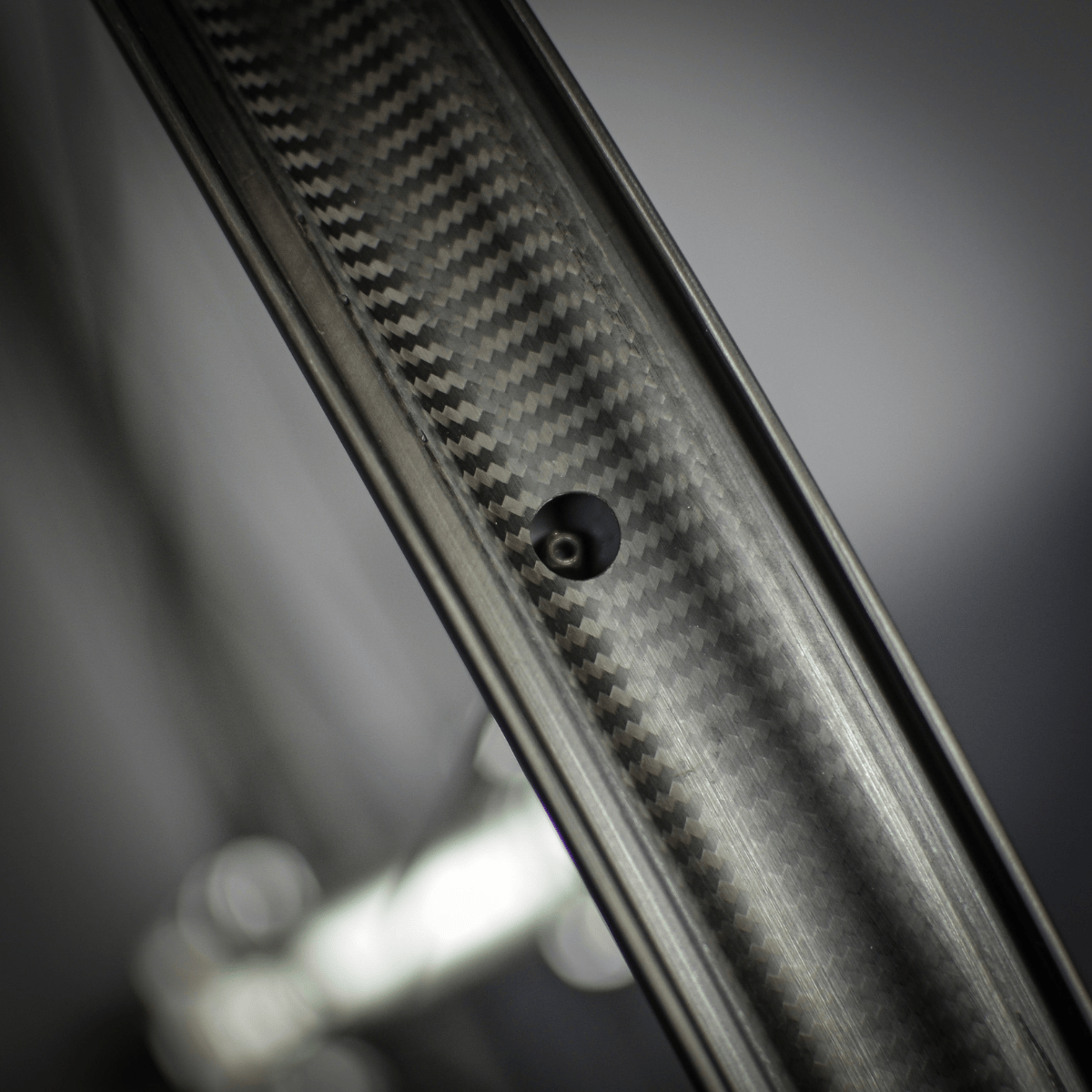
The Hidden Craft Behind Truly Exceptional Bicycle Wheels
Why Wheels Are Never “Just Wheels”
Most cyclists can name their frame.
Fewer can name their wheel builder. (Can you?)
And yet, wheels are the only components that must carry your weight, translate your power, absorb road violence, and remain perfectly true – thousands of times per ride.
This article exists because mass production has trained cyclists to accept averages.
Custom wheel building rejects that premise.
This is not a guide to buying wheels.
This is a guided tour through the craft, decisions, tolerances, and discipline behind wheels built specifically for one rider, one purpose, one standard: uncompromising performance.
By the end of this article, you will never look at a wheelset the same way again.
The Myth of “Off-the-Shelf” Excellence
What mass production gets wrong, and why it matters
Factory wheels are designed to offend no one.
That is their flaw.
They must:
- Fit the average rider
- Survive shipping abuse
- Meet price and sales targets
- Be assembled quickly, repeatedly, predictably
Custom wheels begin where factories stop.
They assume:
- Your weight matters
- Your power output matters
- Your terrain matters
- Your riding style matters
- Your budget matters
The difference is not cosmetic.
It is structural, mechanical, and measurable.
A wheel is a system. Change one variable, and the entire system responds.
The Rider Before the Rim
Why every serious wheelset starts with questions, and not components
Before a single part is selected, a professional wheel build begins with listening.
Key rider variables:
- Body mass (static + dynamic load)
- Power characteristics (steady vs explosive)
- Primary terrain (climbing, flats, mixed, off-road)
- Ride intent (racing, endurance, daily training)
- Maintenance tolerance
These factors determine:
- Spoke count
- Spoke type
- Lacing pattern
- Rim depth and internal width
- Hub engagement and durability requirements
Ignoring the rider is how wheels fail silently – slowly losing stiffness, tension balance, and confidence long before catastrophic failure.
Expect to answer a lot of questions.
The Rim: Where Performance Takes Shape
Depth, width, material, and the consequences of each choice
The rim defines how a wheel behaves long before it ever touches the road.
Critical considerations:
- Internal width influences tire shape, rolling resistance, and grip
- Depth affects aerodynamic stability and crosswind behavior
- Layup orientation determines stiffness and fatigue life
- Brake interface (rim vs disc) dictates heat management and safety margins
A deep rim for a light rider behaves very differently under a powerful sprinter.
Custom building is not about choosing “the best rim”…
It’s about choosing the right rim, for the right job, under the right rider.
The Hub: The Wheel’s Nervous System
Engagement, alignment, and the quiet importance of precision
Hubs rarely sell wheelsets.
They quietly define them.
A premium hub offers:
- Accurate bearing alignment
- Reliable engagement under torque
- Consistent flange geometry
- Long-term serviceability
More engagement points do not automatically mean better performance.
What matters is predictable, immediate power transfer without premature wear.
A skilled builder selects hubs not for marketing appeal, but for how they integrate with spoke angles, rim stiffness, and rider load.
Spokes & Nipples: The Unsung Engineers
Why tension matters more than material
Spokes are not passive connectors.
They are active load managers.
Key variables:
- Material (stainless steel, bladed, butted)
- Alloy vs. brass nipples
- Diameter variation
- Elasticity under load
- Fatigue resistance
A wheel does not stay true because it is tight.
It stays true because tension is evenly distributed within precise tolerances.
This is where machines stop and craftsmanship begins.
Lacing Patterns: Geometry with Consequences
Strength, stiffness, and stress distribution
Radial. Two-cross. Three-cross. Asymmetric.
Each pattern changes:
- Torque transfer
- Lateral stiffness
- Spoke fatigue
- Load sharing
There is no universal “best” pattern—only correct solutions for specific use cases.
A builder who defaults to habit rather than geometry is assembling, not engineering.
The Build: Where Craft Becomes Invisible
Tensioning, stress relief, and the discipline of patience
Professional wheel building is slow by design.
The process includes:
- Progressive tensioning in stages
- Repeated stress relieving
- Micro-adjustments measured in fractions of a turn
- Final tension balancing across all spokes
This is not about speed.
It is about long-term stability under real-world abuse.
A well-built wheel does not announce itself.
It simply performs. Ride after ride, season after season.
Quality Control: What You Never See. But Always Feel
Why true wheels still fail, and great ones don’t
Final inspection includes:
- Lateral and radial trueness
- Dish accuracy
- Absolute and relative spoke tension
- Bearing smoothness under load
A professional wheel leaves the stand pre-stressed, pre-settled, and predictably stable.
This means you’ll never need to have the wheel trued after a “break-in” period.
Anything less is unfinished work.
CONCLUSION
The Difference You Feel, But Can’t Fake
Custom wheels are not a luxury.
They are a declaration.
They say:
- You value precision over hype
- You understand performance as a system
- You expect equipment to match your intent
Once you ride a wheel built for you, compromise becomes obvious everywhere else.
If You’re Ready for Wheels Built Without Shortcuts
If this article changed how you think about wheels, the next step is simple:
- Ask better questions
- Demand transparency
- Work with builders who can explain why, not just what
Because the best wheels aren’t advertised loudly.
They’re built quietly—
and outlast.
Want to explore how much a handbuilt set of wheels, engineered just for you, will cost?
Click here to request a free, no-obligation quote.
No responses yet